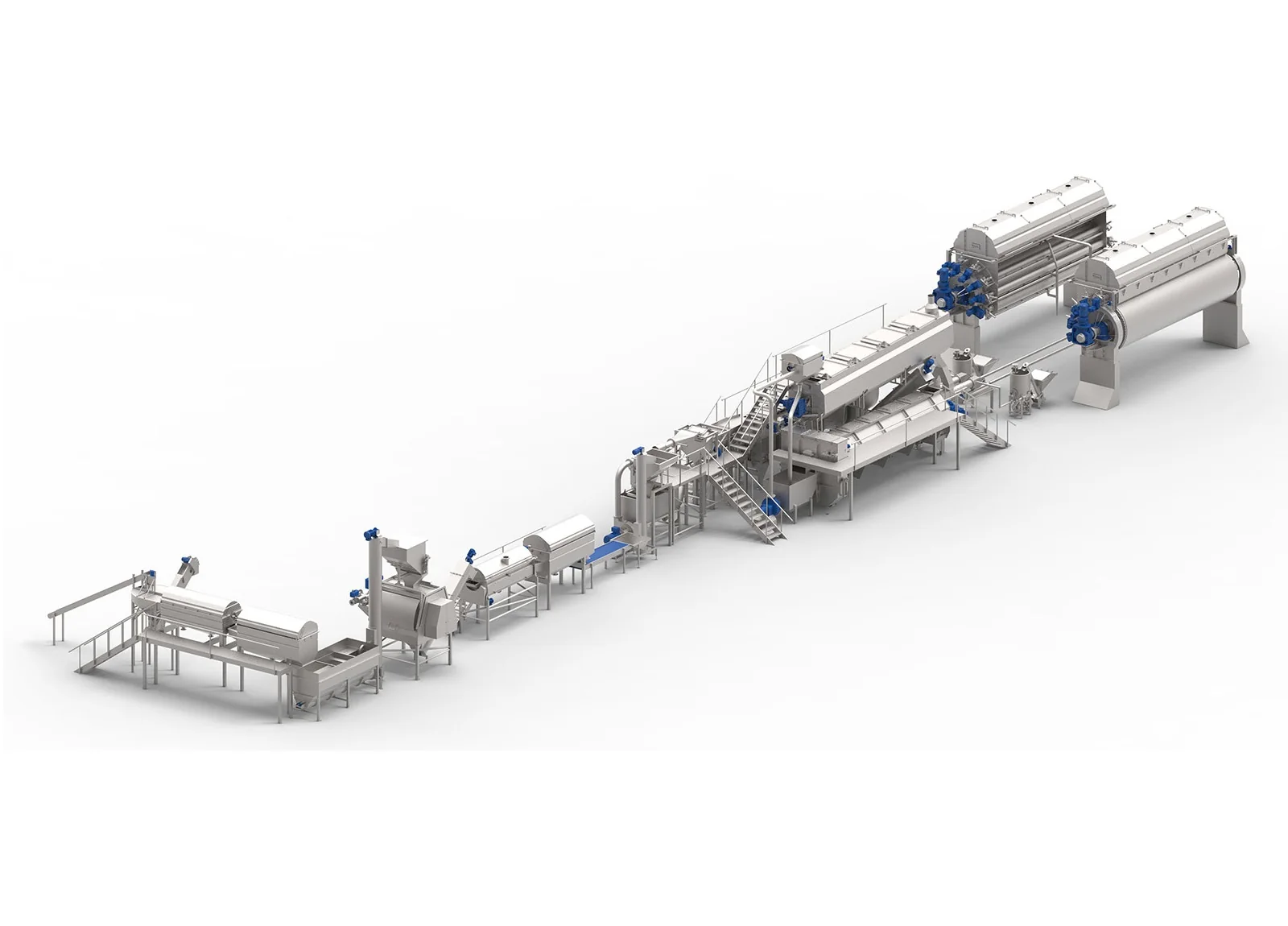
From raw product to end product
Fourteen steps. One control system.
Fourteen process steps, available individually and ready to integrate into existing lines. In an EIMA line, they work together under a common control system.
Filter
Which process step are you looking for?
Every machine is available as a stand-alone unit and can be connected to existing control systems.
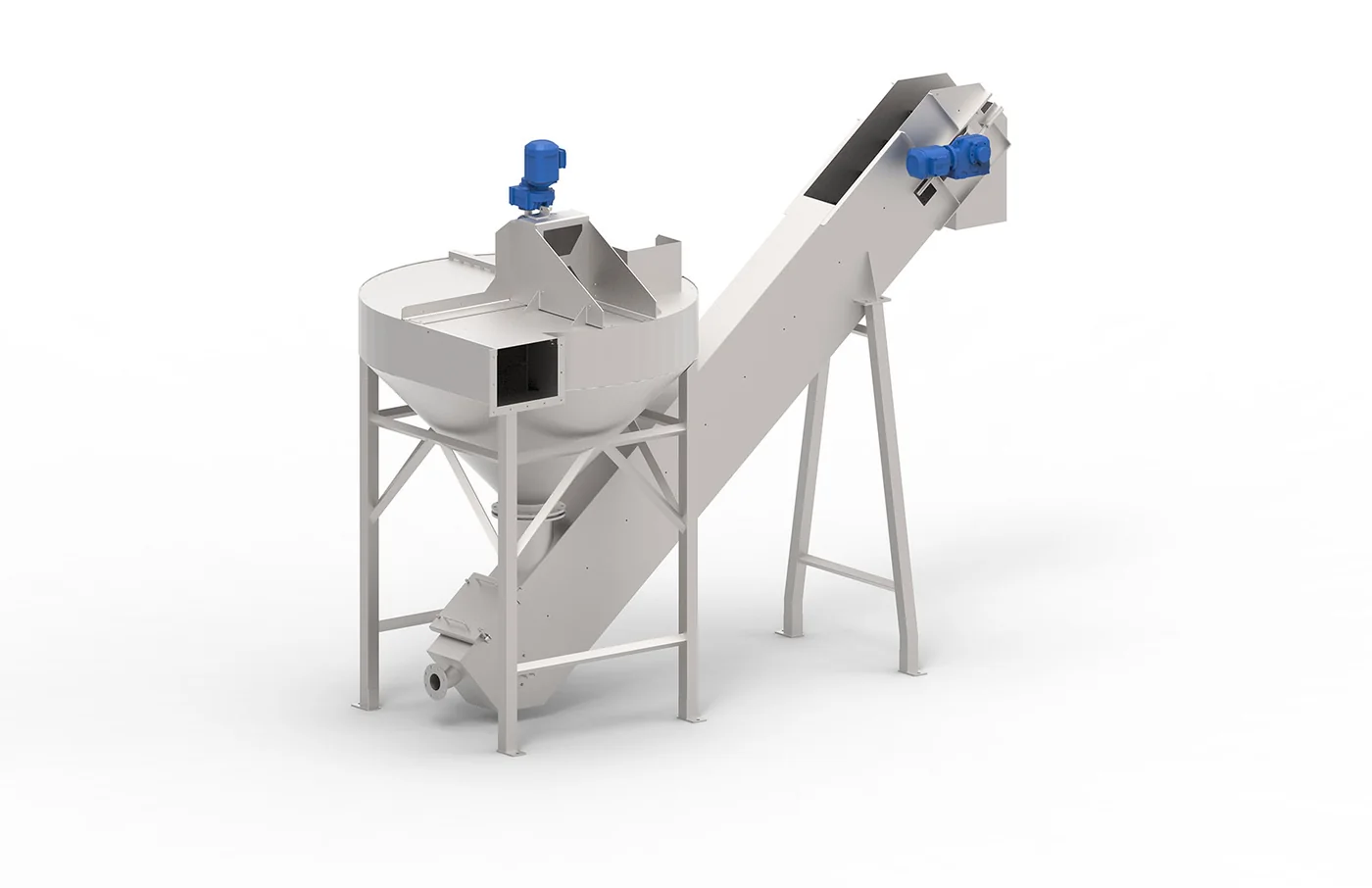
Destoning
Stones and clods out before they reach the peeler or pump.
View designs Process 02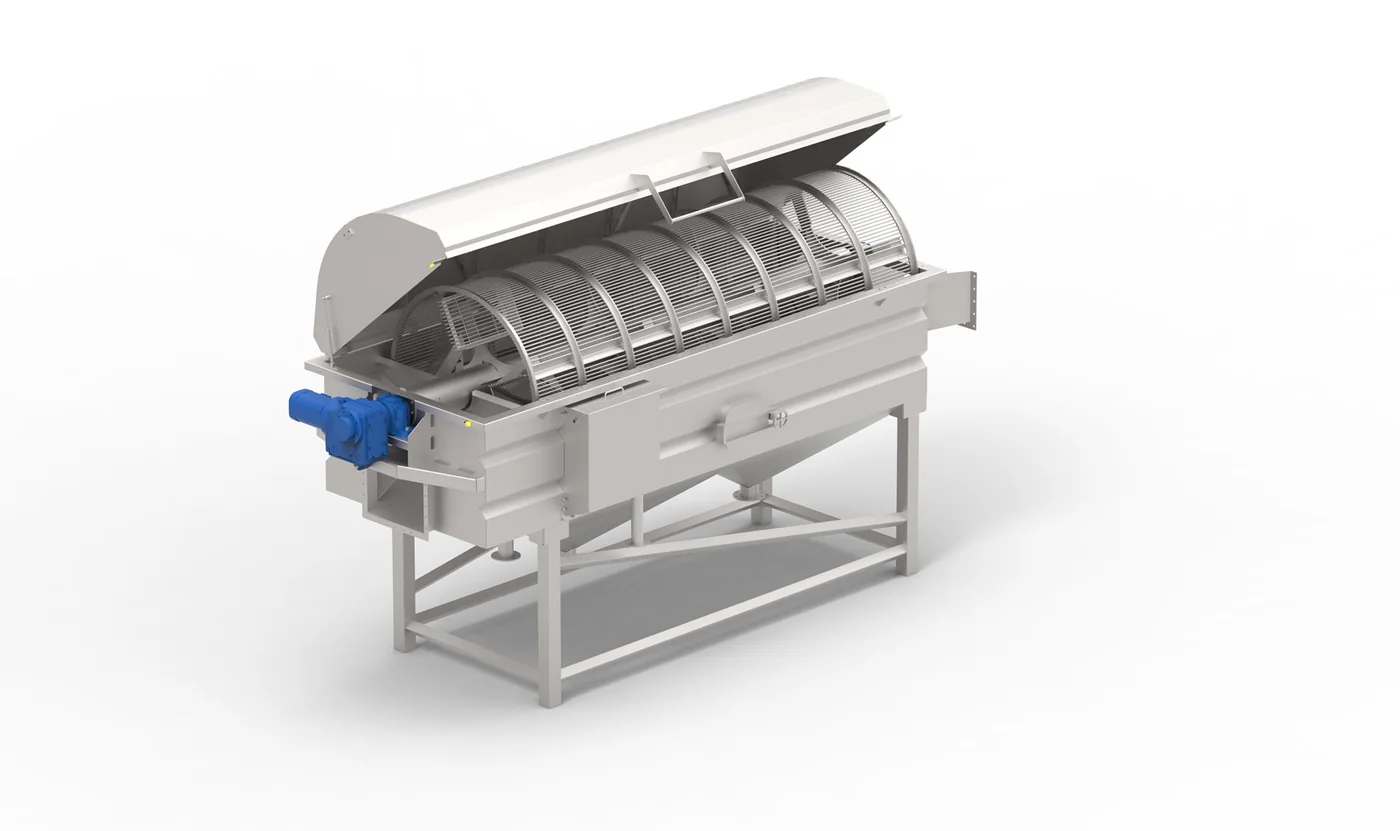
Washing
Immersion bath, spray section or a combination – depending on soiling and water volume.
View designs Process 03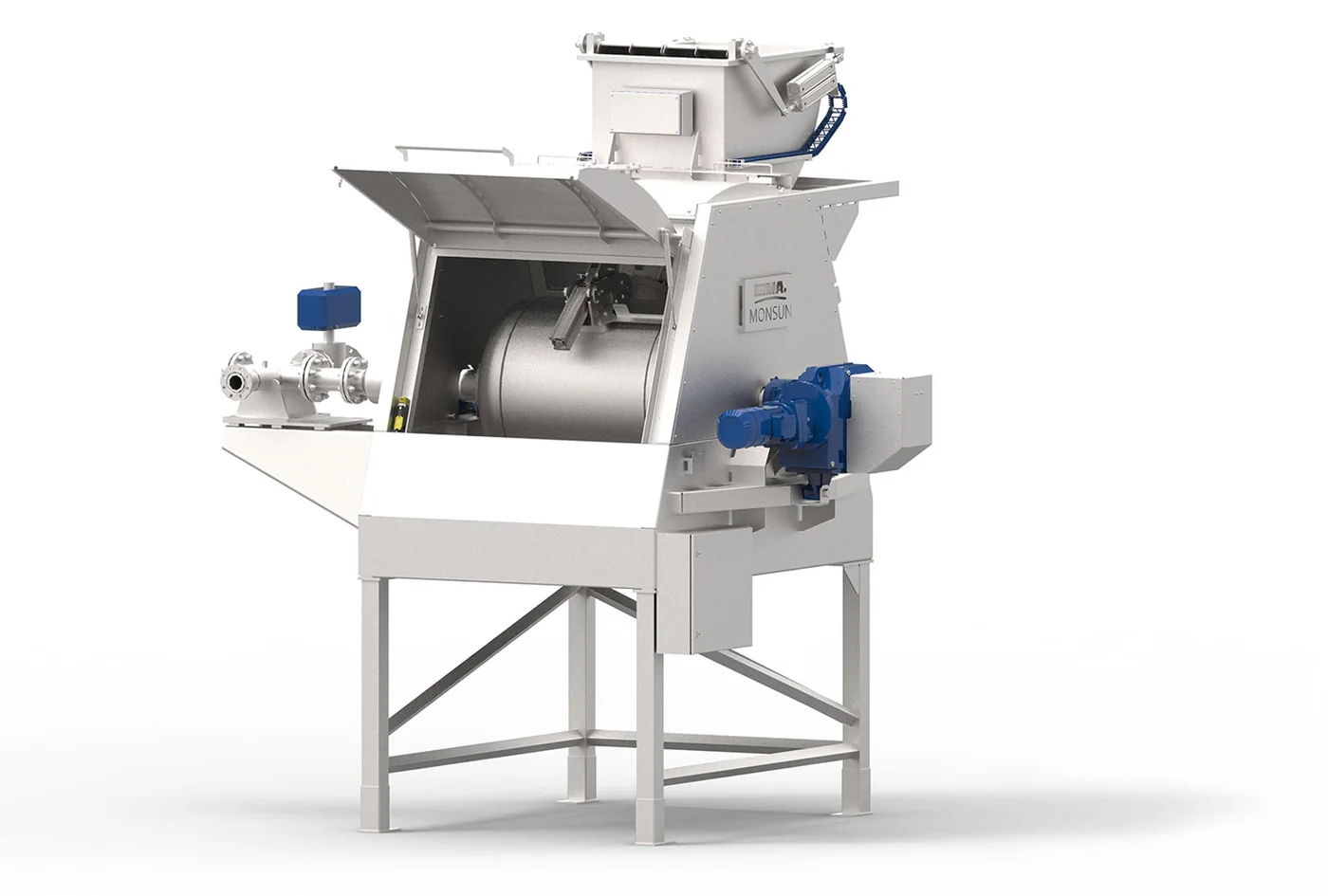
Peeling
Steam, roller, batch, brush or centrifuge – depending on the peeling loss target.
View designs Process 04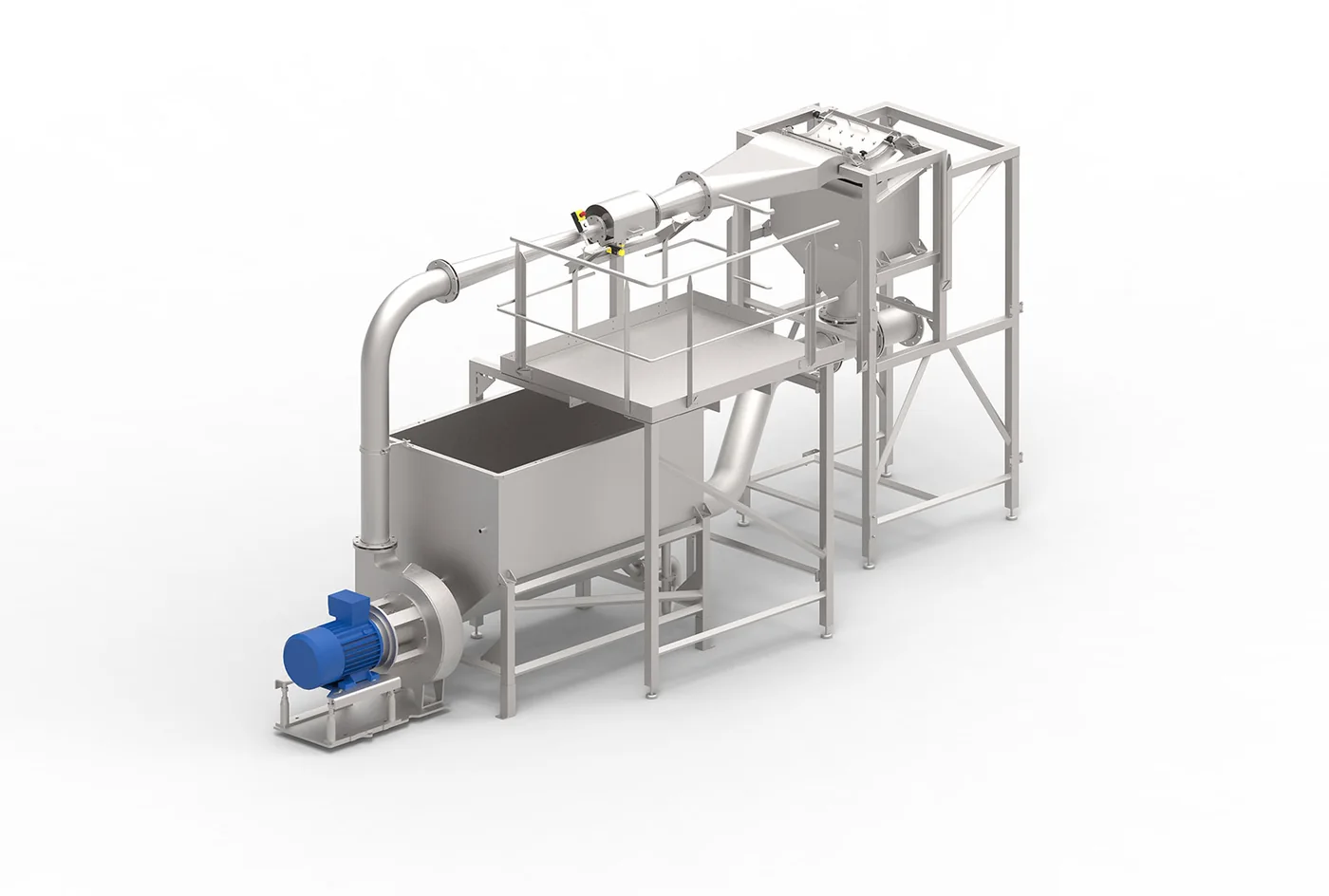
Cutting
Hydro cutting, halving, quartering – precisely to your cut geometry.
View designs Process 05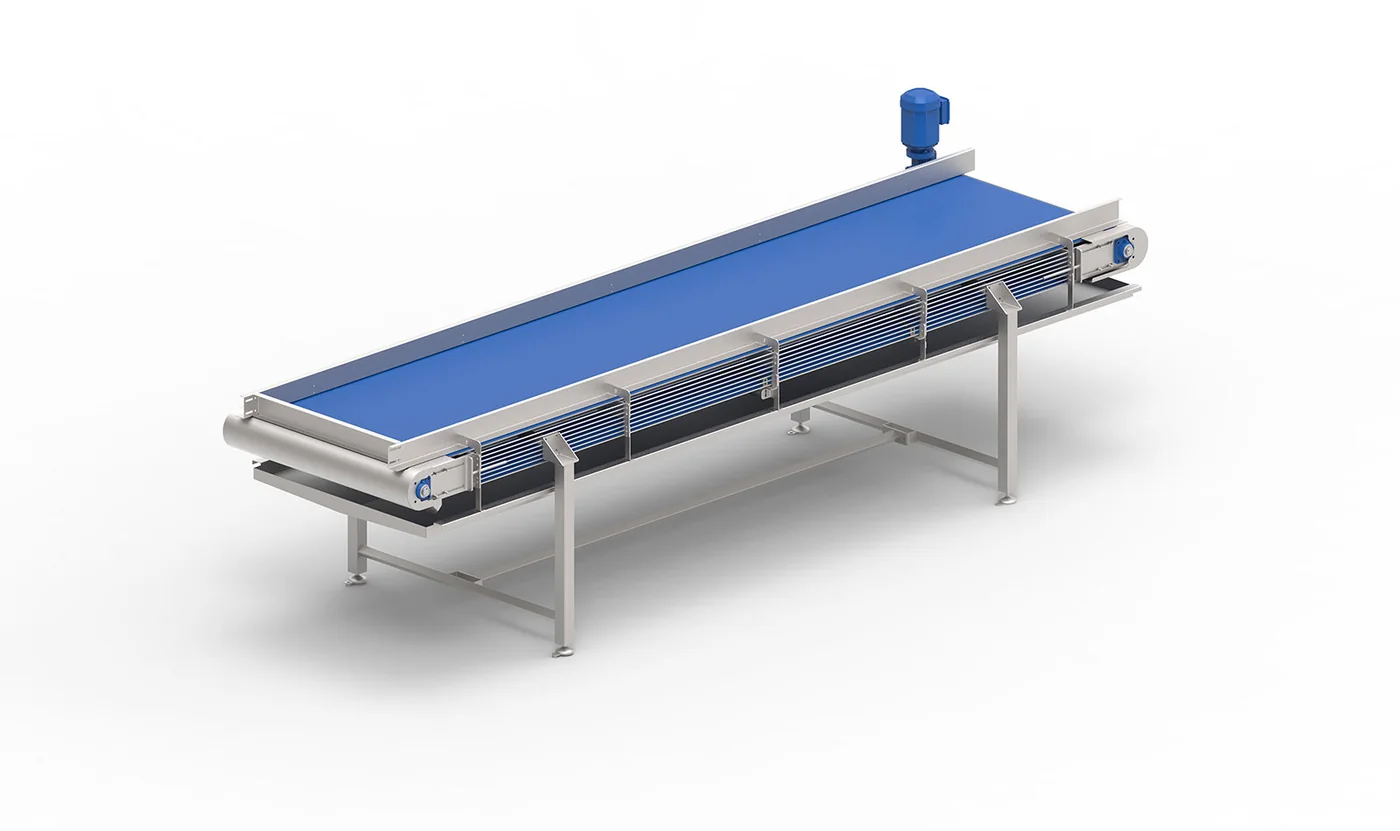
Inspection
Visual inspection and manual sorting at ergonomically designed tables.
View designs Process 06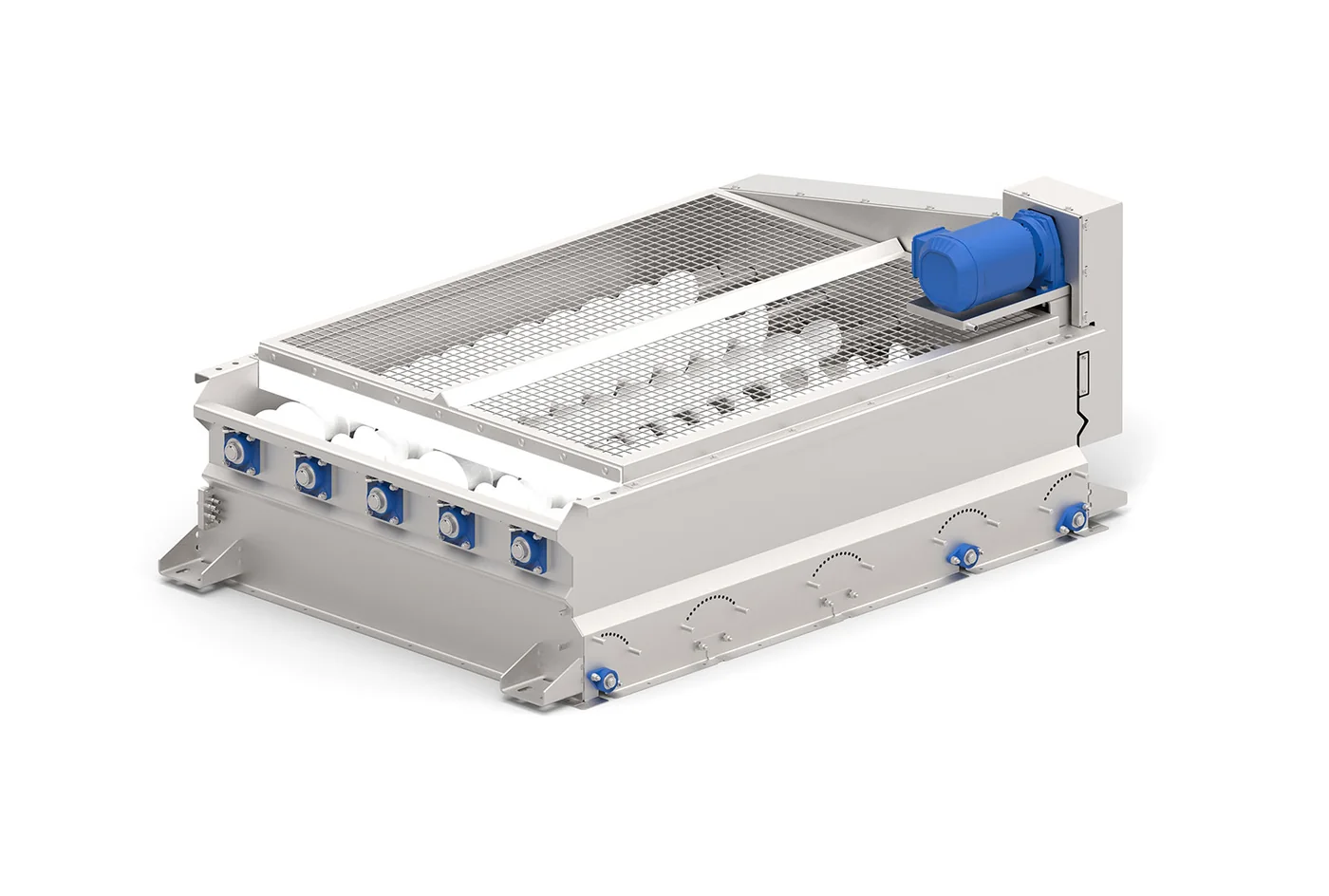
Grading
Size grading via longitudinal rollers, infinitely adjustable.
View designs Process 07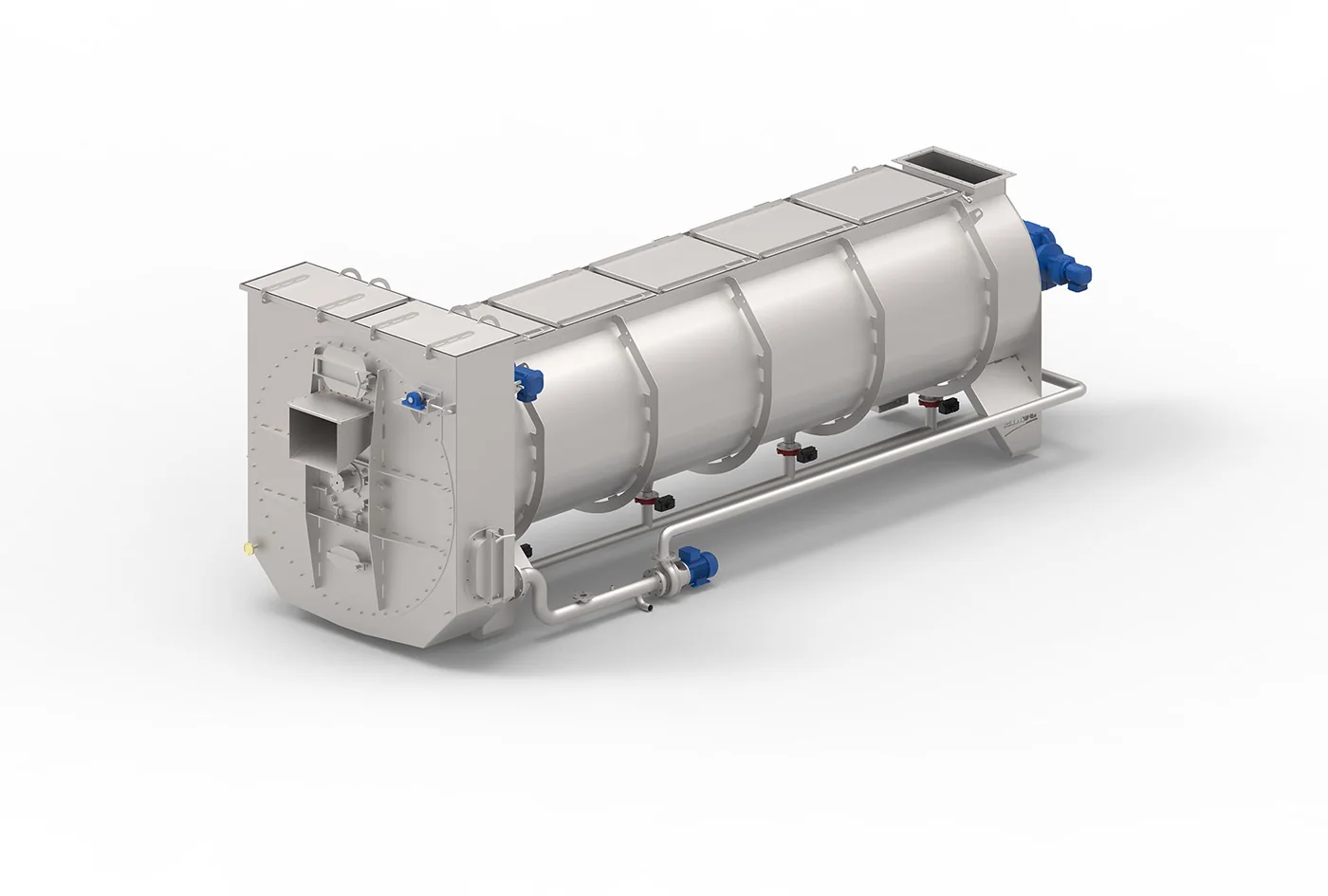
Blanching
Horizontal, screw or drum – for consistent blanching quality.
View designs Process 08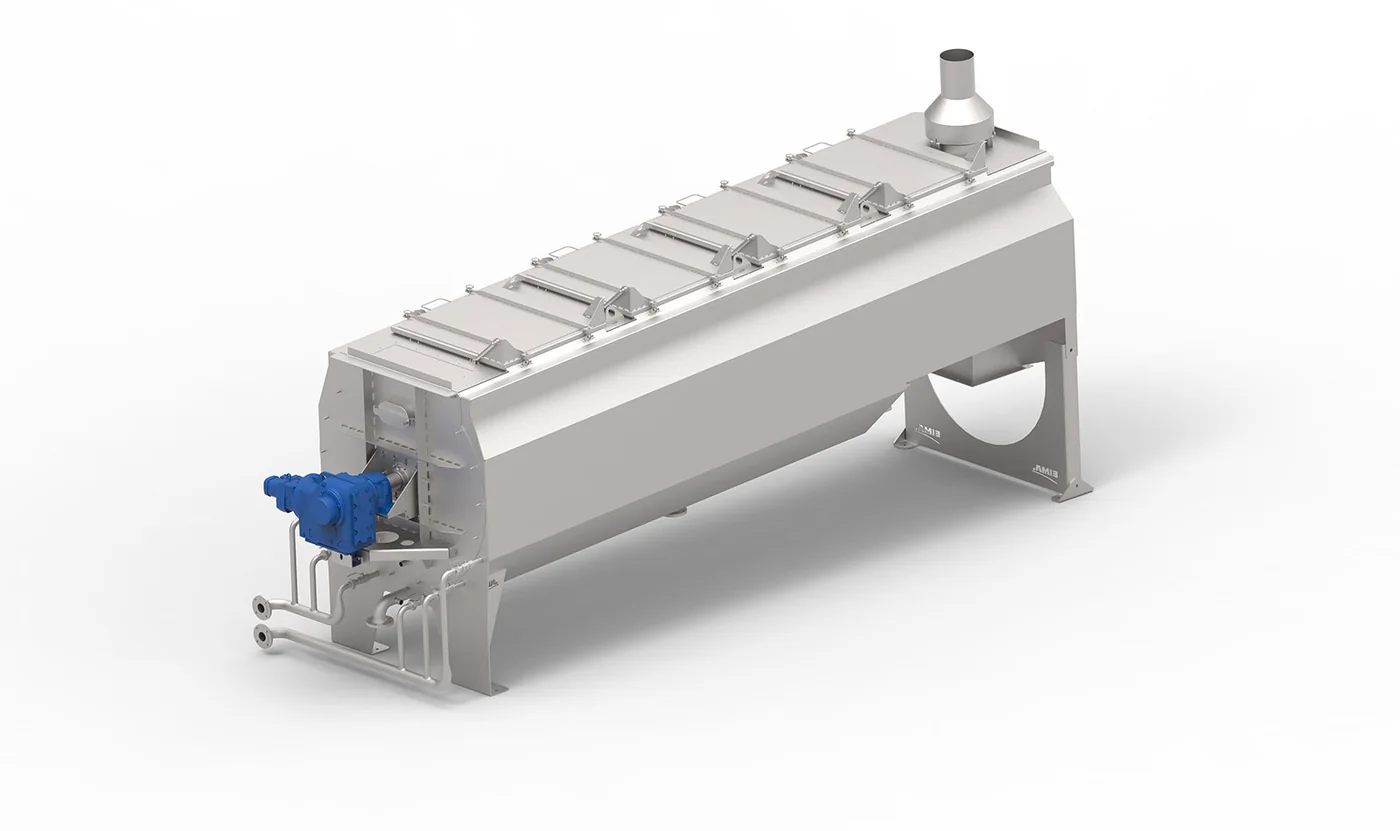
Cooking
Steam cooker for peeled potatoes and slices.
View designs Process 09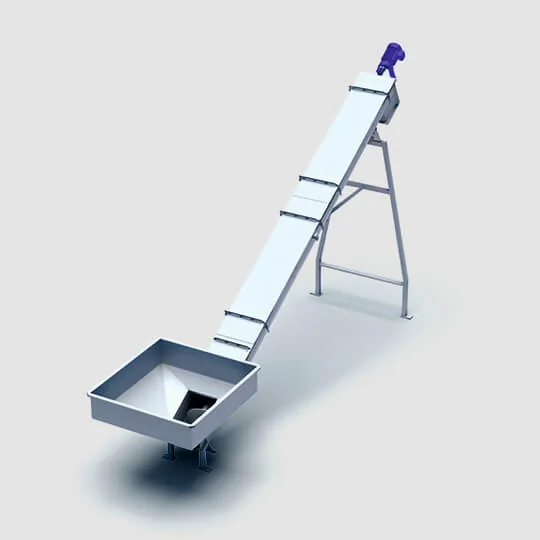
Cooling
Cooling screw conveyor: temperature control and transport in one step.
View designs Process 10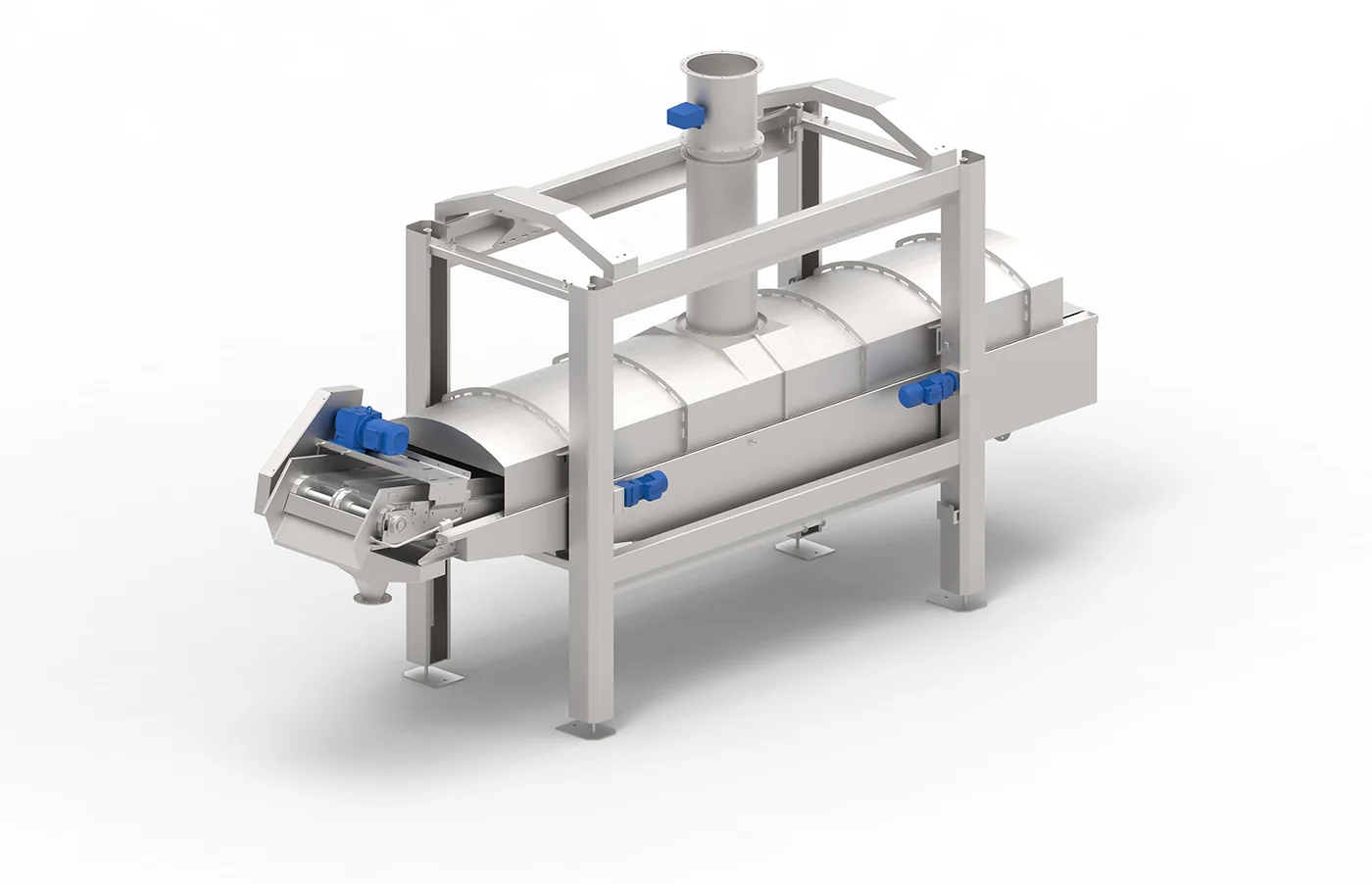
Frying
Fryer with oil filter system that reduces fresh oil consumption.
View designs Process 11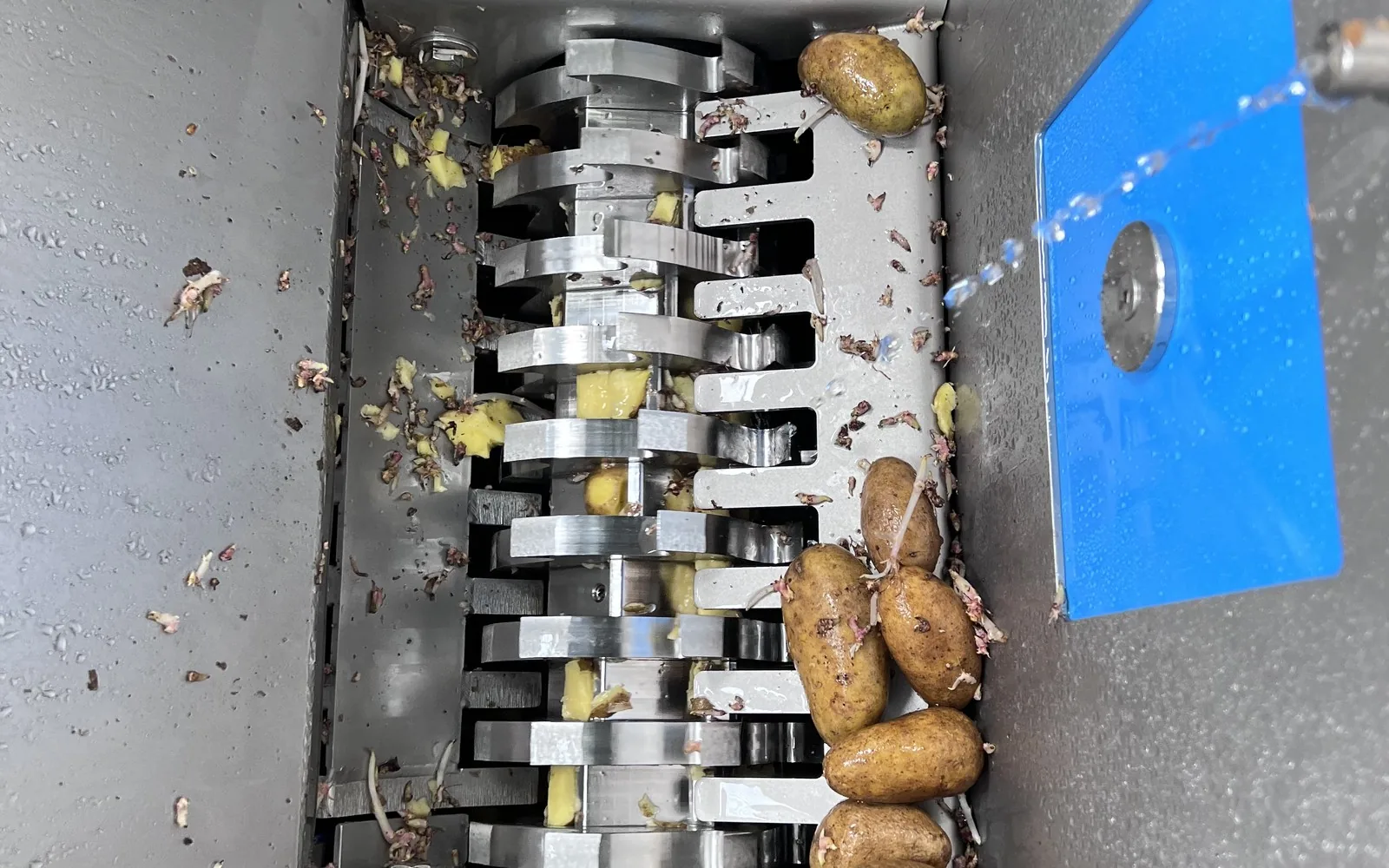
Size reduction
Trimmings and offcuts back into value creation.
View designs Process 12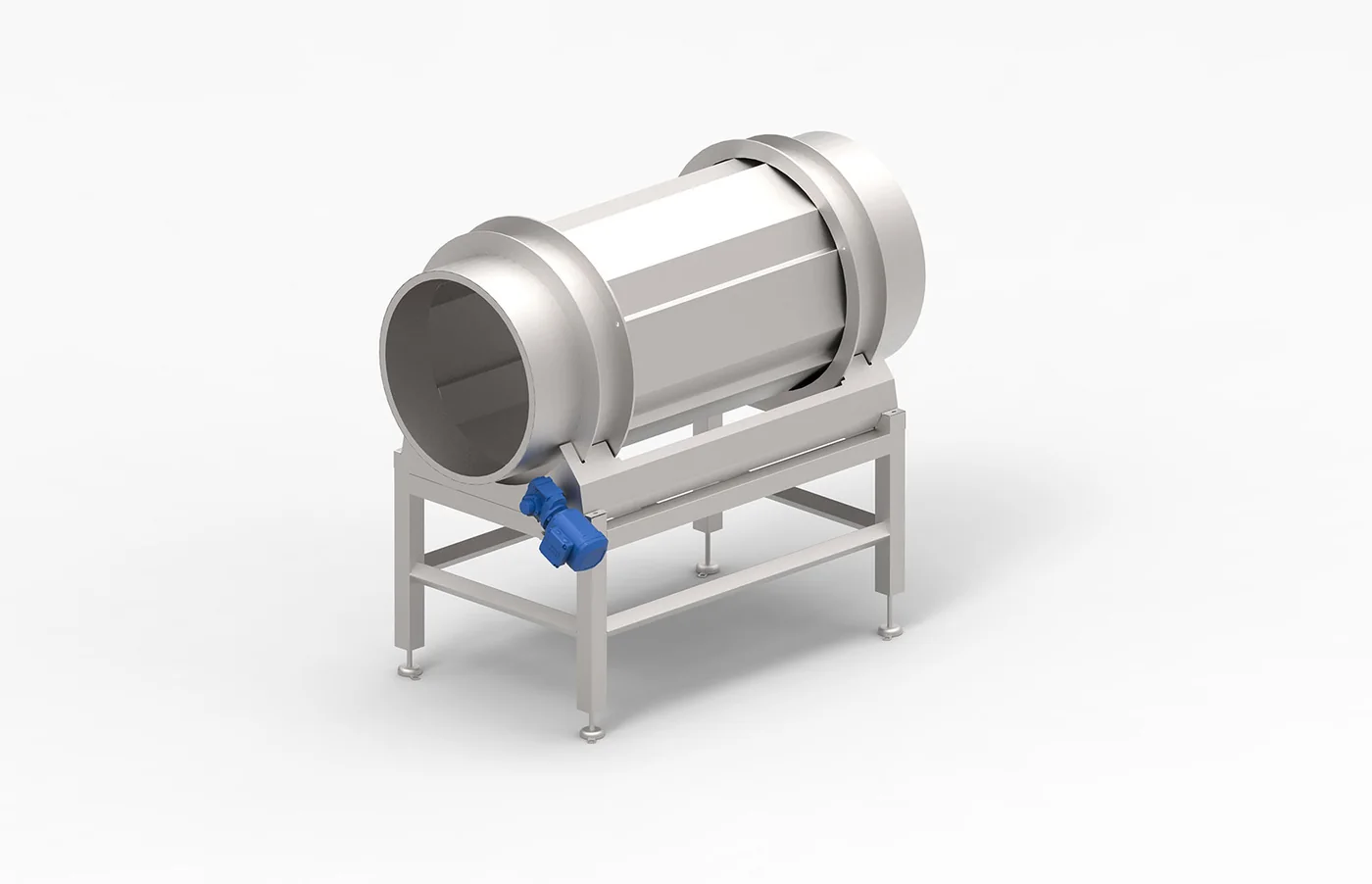
Mixing
Seasoning drum, salad and horizontal mixers.
View designs Process 13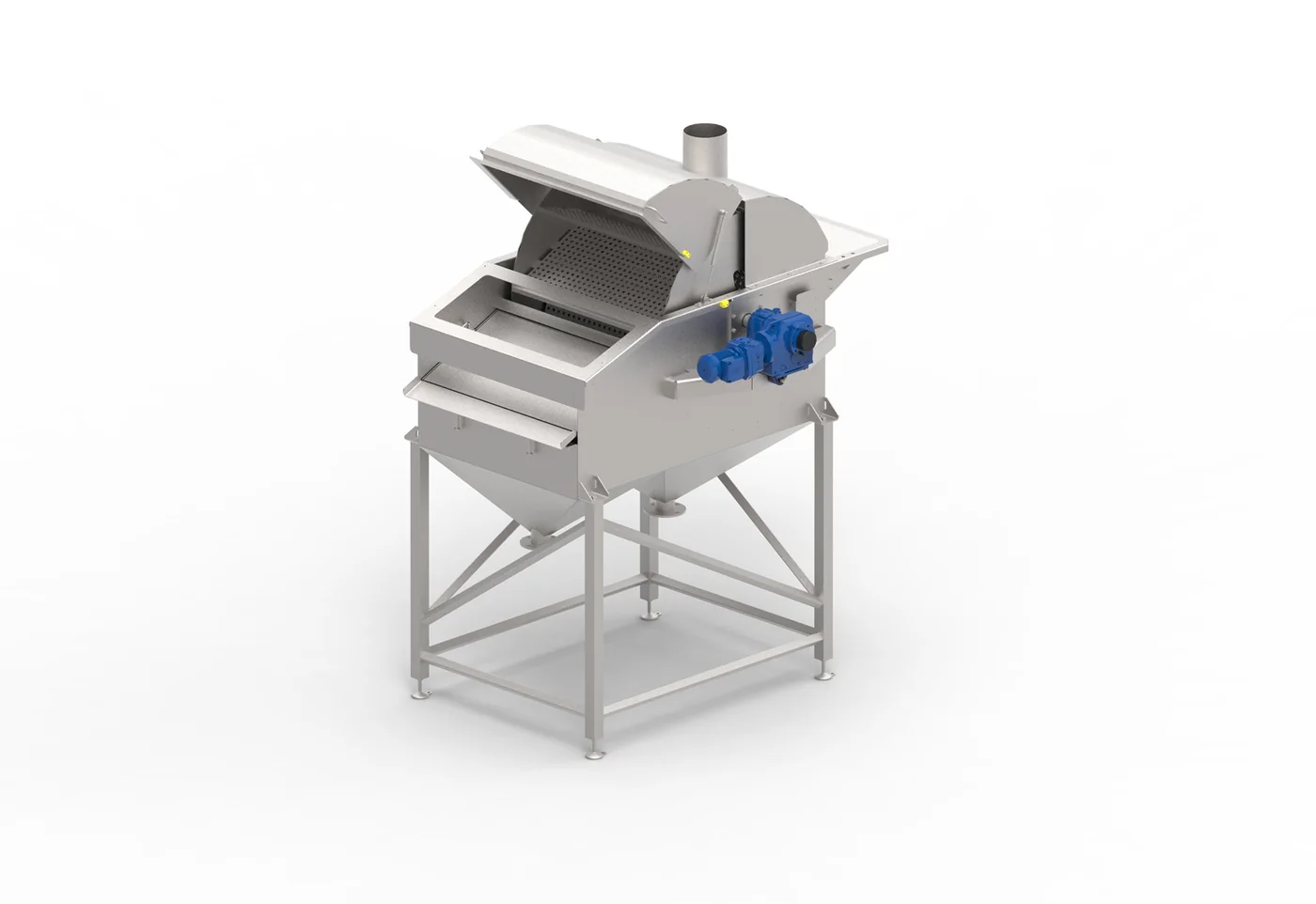
Sterilising
Sterilisation bath and screw for longer shelf life.
View designs Process 14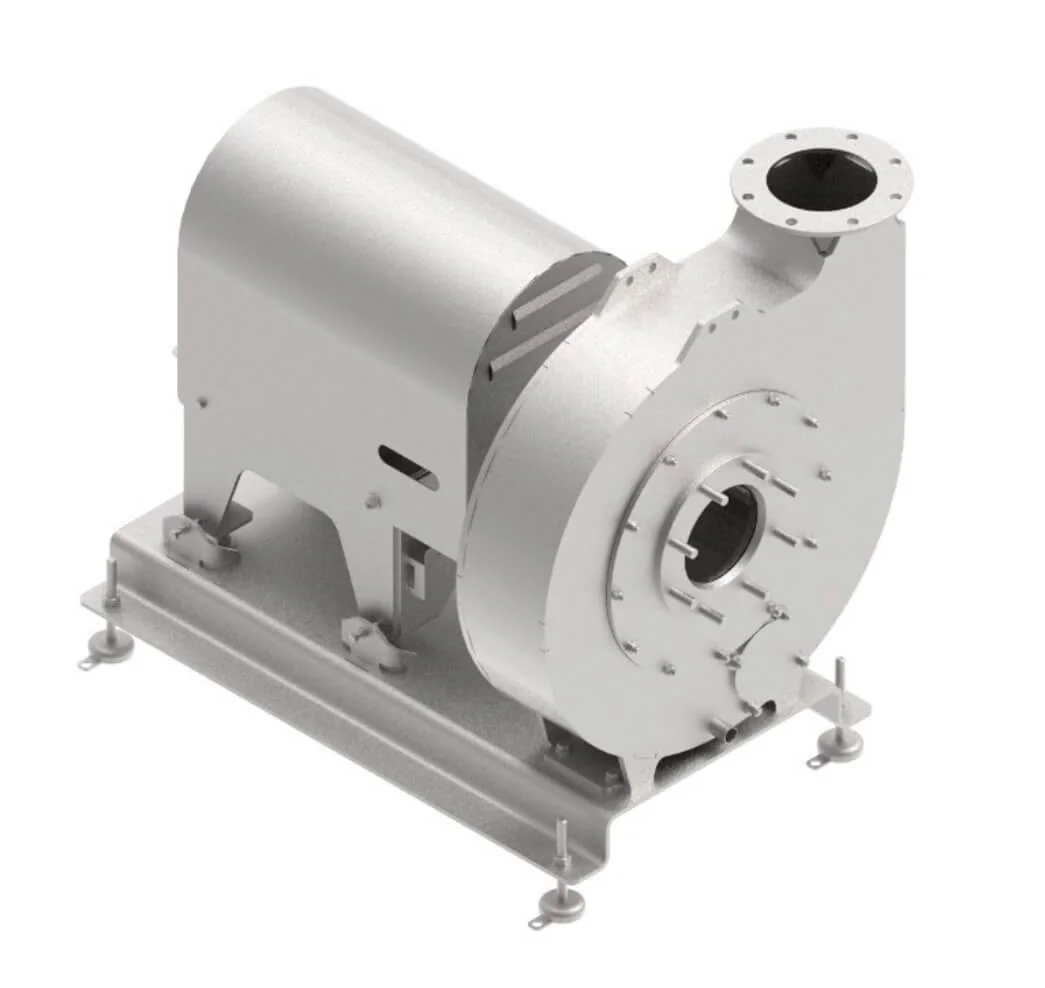
Centrifugal pumps
Centrifugal pumps with large free passage, for solids up to 210 mm.
View designsOn film
Fourteen stations, one line
From raw product to finished product – developed and built in Bad Zwischenahn.
Individually or as a line
Buying a single unit is not a smaller version of a plant project.
It is a different task – and we treat it as one.
When you replace a single machine, it comes down to transfer heights, cycle time and the protocol of your existing control system. That is why we ask about the interfaces before we quote, not just about capacity. We connect new EIMA modules to your existing control system instead of selling you a complete rebuild.
Frequently asked questions
What prospective customers ask us first
Individual machines are fine. Each of the fourteen process steps can be supplied as a single unit; in an EIMA line they work together through a shared control system. Our smallest line architecture starts at 150 kg/h of finished product, the peeling lines at 500 kg/h. Below that, a single machine is usually the more economical decision.
Buying one unit is not a smaller version of a plant project but a different task: it comes down to transfer heights, cycle time and the protocol of your existing control system. How the steps look as a whole is shown by the line architectures.
Yes. We connect new EIMA modules to existing control systems instead of selling a complete rebuild. In the control cabinet we use Siemens components (S7-1200, S7-1500, ET200), which communicate with your existing plant via various protocols; programming is done in Siemens TIA Portal.
That is why, before we quote, we ask about transfer heights, cycle times and the protocol of your control system, not just about capacity. If a machine does not fit, we will say so. More under automation technology.
Potatoes are the largest application. Destoning, washing and peeling are also designed for beetroot, carrots, celeriac and pumpkin; inspection, grading, blanching, size reduction and sterilising for potatoes and vegetables. The centrifugal pumps additionally convey peas and mussels up to a particle size of 210 mm.
Not every station is intended for every raw product: cutting, for example, is for potatoes, mixing for potatoes and salad. The product range is stated for each station. Whether your produce fits, we clarify on the basis of size grade, firmness and degree of soiling.
We build to high hygiene standards, with food-grade stainless steel and design details that can be cleaned quickly. In conveying technology the belts are also available in a hygienic design. On individual machines this shows up concretely: the centrifugal pumps are corrosion-resistant and have inspection covers, and the seasoning drum is designed for fast cleaning and product changes.
When shutting down large lines, your team can already begin cleaning while the last product is still being conveyed out of the plant. Which requirements your operation or your customers set, we clarify before the quotation, not after.
Yes. Spare parts come from our own production, including for older series, and are still available after fifteen years. Maintenance and inspection take place on site or as a planned stoppage within your cleaning windows.
Conversion and retrofit are manufacturer-independent, including on third-party plants: we connect new units to your control system, and older lines can be given a current control system and visualisation on request, without replacing the mechanics. Where remote maintenance is provided for in the control cabinet, software work takes place without a site visit. Details under Service & Retrofit.
Send us the product, the target capacity and the interfaces to your existing equipment. Floor space, connected load and deadlines also help. If the capacity is still open, that is fine too: in the first conversation we work through it with your figures, free of charge and without obligation.
After that we check the integration and tell you honestly if it does not fit. We give binding dates in the quotation, because they depend on the expansion stage, special components and your on-site works.
Next step
One machine, a group or the whole line?
We supply the stand-alone unit just as we supply the turnkey line – and integrate both into your existing control system.